


9-Inch vs. 12-Inch Car Multimedia Players: Which Size Should Buyers Choose?
Choosing between a 9-inch and a 12-inch car multimedia player involves more than comparing screen dimensions. For automotive electronics brands, distributors, and aftermarket retailers, display size affects dashboard compatibility, user interface layout, viewing distance, installation requirements, and product positioning.
A 9-inch car multimedia player can offer a practical balance between screen visibility and dashboard space. A 12-inch model provides a larger display area for navigation, media, and vehicle information, but it may require more careful consideration of mounting position and dashboard structure.
For B2B buyers sourcing automotive displays, the right choice depends on the target vehicle models, customer expectations, installation environment, and intended product features. This guide compares the two sizes and explains what buyers should evaluate before selecting a product for their market.
1. Understanding the Difference Between 9-Inch and 12-Inch Displays
The most important point is that screen size is measured diagonally, not horizontally or vertically.
A 12-inch display is not simply 3 inches wider than a 9-inch display. Its actual width and height depend on the screen’s aspect ratio.
Screen Size and Display Area
For illustration, consider two displays with a 16:9 aspect ratio:
| Measurement | 9-Inch Display | 12-Inch Display |
|---|---|---|
| Diagonal size | 9 inches | 12 inches |
| Approximate width | 7.85 inches | 10.46 inches |
| Approximate height | 4.41 inches | 5.88 inches |
| Approximate display area | 34.6 sq. in. | 61.5 sq. in. |
These figures are mathematical estimates for 16:9 active display areas. Actual products may use different aspect ratios, bezels, housings, and mounting dimensions.
A 12-inch 16:9 screen has approximately 78% more active display area than a 9-inch screen with the same aspect ratio. This can provide more room for maps, media controls, and split-screen interfaces.
However, the larger active area does not automatically mean better usability. Resolution, brightness, viewing angle, interface design, and installation position also matter.
Active Display Size vs. Overall Product Dimensions
Buyers should distinguish between:
- Active display area: The part of the screen that shows content.
- Bezel dimensions: The border surrounding the active screen.
- Housing dimensions: The complete physical dimensions of the display assembly.
- Mounting dimensions: The space and fixing points required for installation.
A product advertised as a 12-inch car multimedia player may require considerably more dashboard space than its active display dimensions suggest.
For aftermarket and OEM projects, request a dimensioned drawing rather than relying on diagonal screen size alone.
2. 9-Inch Car Multimedia Players: Advantages and Applications
A 9-inch car multimedia player is often suitable for vehicles where buyers want a larger touchscreen than a traditional compact head unit without occupying as much dashboard space as an oversized display.
Better Fit for More Compact Dashboards
Many vehicles have limited space around the center console, air vents, physical controls, and instrument panel.
A 9-inch display may be easier to integrate into these environments, depending on the dashboard design and mounting structure.
Potential applications include:
- Compact passenger cars.
- Selected older vehicle models.
- Aftermarket infotainment upgrades.
- Vehicles with limited center-console space.
- Cost-conscious multimedia system replacements.
Compatibility must still be checked for each vehicle. A 9-inch screen is not automatically a universal fit.
Practical Screen Space for Everyday Functions
A 9-inch display can provide enough space for common functions such as:
- GPS navigation.
- Music and video playback.
- Bluetooth calling.
- Reverse camera display.
- Vehicle information interfaces.
- Compatible smartphone connectivity features.
The usability of these functions depends on the software, hardware, and supported interfaces, not screen size alone.
Potentially Simpler Product Positioning
For distributors and aftermarket retailers, 9-inch products can serve customers who prioritize a balanced combination of display size, installation practicality, and price.
However, actual product cost depends on the display panel, processor, memory, operating system, возможность подключения, accessories, and manufacturing specifications.

3. 12-Inch Car Multimedia Players: Advantages and Applications
A cc car multimedia player is designed for customers who prefer a larger visual interface and have sufficient dashboard space for installation.
More Space for Navigation and Information
A larger display can show more map details and provide additional space for interface elements.
Potential benefits include:
- Larger map presentation.
- More room for touch controls.
- Improved visibility of selected interface elements.
- More flexible split-screen layouts.
- Greater visual impact in the vehicle cabin.
For drivers who frequently use navigation or multimedia functions, a larger screen may offer a more comfortable viewing experience when properly positioned.
Suitable for Large Dashboard Designs
A 12-inch car screen may be appropriate for selected SUVs, larger passenger vehicles, and custom aftermarket installations.
It can also suit vehicle owners seeking a more modern infotainment appearance.
Nevertheless, buyers should not assume that a large dashboard automatically supports a 12-inch display. The actual mounting area, screen orientation, trim structure, and driver sightlines must be evaluated.
More Flexible Interface Design
A larger screen may give software developers more room to arrange navigation, audio controls, vehicle information, and other supported functions.
For example, a split-screen interface may display navigation alongside music information.
The available functions depend on the operating system, application support, processor performance, and software customization. Screen size alone does not guarantee multitasking capability.
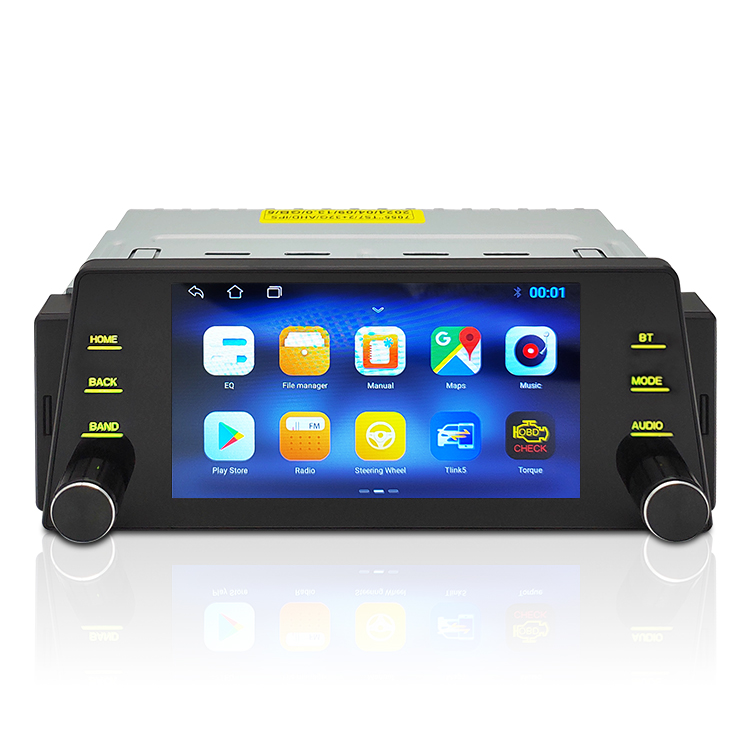
4. 9-Inch vs. 12-Inch Car Multimedia Players: Key Differences
The two sizes serve overlapping but different market requirements.
| Comparison Factor | 9-Inch Car Multimedia Player | 12-Inch Car Multimedia Player |
|---|---|---|
| Display area | More compact | Significantly larger at the same aspect ratio |
| Dashboard space | Generally easier to accommodate | Requires more installation space |
| Navigation | Suitable for standard map interfaces | More room for larger map layouts |
| Interface design | Compact control arrangement | More flexibility for split-screen layouts |
| Visual impact | Moderate screen presence | More prominent cabin display |
| Installation | Depends on vehicle-specific mounting | May require more careful dashboard integration |
| Target vehicles | Compact cars and selected aftermarket upgrades | Selected larger vehicles and custom installations |
| Product positioning | Practical screen-size upgrade | Large-screen infotainment experience |
Neither size is universally better. Buyers should select according to the actual vehicle installation conditions and the intended user experience.
5. Dashboard Compatibility: The Most Important Selection Factor
A large screen can attract attention, but dashboard compatibility determines whether the product can be installed properly.
Check the Available Dashboard Space
Before selecting a 9-inch or 12-inch unit, measure the available installation area.
Important dimensions include:
- Maximum screen width.
- Maximum screen height.
- Available mounting depth.
- Distance from nearby air vents.
- Clearance around physical buttons and controls.
- Position relative to the driver and passenger.
For custom automotive display projects, 2D drawings or 3D installation models can help identify potential interference before sample production.
Consider Mounting Position and Viewing Angle
The screen should be positioned so that drivers can view important information without excessive head movement.
A large screen mounted too high, too low, or too far from the natural viewing direction may create usability problems.
Buyers should consider:
- Driver eye position.
- Screen tilt and orientation.
- Daylight reflections.
- Glare from windows.
- Accessibility of touch controls.
- Potential obstruction of the driver’s forward view.
The display should not interfere with the driver’s view of the road or essential vehicle controls.
Check Vehicle-Specific Integration
A car multimedia player may need to connect with existing vehicle systems.
Depending on the vehicle and product configuration, buyers may need to verify:
- Power and wiring connections.
- Steering wheel control compatibility.
- Reverse camera input.
- Original vehicle camera integration.
- CAN bus interface requirements.
- Factory amplifier compatibility.
- Original vehicle information display functions.
These features are not guaranteed by screen size or by the term “universal.” Compatibility should be confirmed for the exact vehicle model and product configuration.
6. Display Specifications Matter More Than Screen Size Alone
A larger display can still deliver a poor experience if its image quality and hardware performance are inadequate.
B2B buyers should evaluate the complete display specification.
Resolution and Pixel Density
Resolution determines how many pixels are used to display an image. A larger screen with the same resolution as a smaller one has lower pixel density.
For example, a 12-inch display and a 9-inch display may both use the same resolution. The larger display will spread those pixels across a larger area.
When comparing products, review:
- Native resolution.
- Pixel density.
- Brightness.
- Contrast ratio.
- Viewing angle.
- Color performance.
- Touch response.
Higher resolution may improve image detail, but its practical value depends on the display size, viewing distance, content, and system performance.
Brightness and Sunlight Readability
Car displays operate in changing lighting environments, including direct sunlight and nighttime driving.
A screen that looks clear indoors may become difficult to read in bright daylight.
Buyers should review the specified brightness and, where possible, evaluate samples under realistic cabin lighting conditions.
Also consider automatic brightness adjustment, anti-glare treatments, and display reflection characteristics if these features are relevant to the target product.
Touchscreen Performance
A responsive touchscreen improves navigation through menus and controls.
Important evaluation points include:
- Touch response consistency.
- Multi-touch support, where required.
- Edge and corner responsiveness.
- Glove-use requirements, if applicable.
- Surface scratch resistance.
- Long-term touch performance.
Test the actual user interface rather than relying solely on the panel’s technical specifications.
7. Hardware and Multimedia Functions: What Should Buyers Compare?
Screen size does not determine processing performance. A 9-inch product with stronger hardware may offer a smoother experience than a poorly configured 12-inch model.
Processor and Memory
For Android-based car multimedia players, processor capability and memory configuration affect application performance and multitasking.
Buyers should confirm:
- Processor model and platform.
- RAM capacity.
- Internal storage.
- Operating system version.
- Application compatibility.
- Firmware update support.
Avoid comparing products based only on advertised Android version or memory capacity. The processor platform and software optimization also matter.
Connectivity and Smartphone Integration
Depending on the product configuration, car multimedia players may support:
- Bluetooth.
- Wi-Fi.
- GPS navigation.
- USB connectivity.
- Apple CarPlay.
- Андроид Авто.
- 4G or other cellular connectivity.
- Rear-view or surround-view camera inputs.
These functions may require specific hardware, software licenses, antennas, or external accessories. Confirm the actual configuration before making product claims.
Audio and Camera Integration
For some buyers, the multimedia player is part of a wider in-car entertainment and safety system.
Check whether the selected product supports the required audio outputs, amplifier interfaces, microphone connections, and camera inputs.
The compatibility of these interfaces should be validated with the target vehicle and accessories.
8. How B2B Buyers Should Choose Between 9-Inch and 12-Inch Models
The correct screen size depends on the product’s intended market and installation requirements.
Choose a 9-Inch Model When…
A 9-inch car multimedia player may be the better choice when:
- The target dashboard has limited installation space.
- Customers prefer a moderate screen size.
- The product is designed for selected compact vehicles.
- Installation simplicity is a major selling point.
- The target market prioritizes practical upgrades.
Choose a 12-Inch Model When…
A 12-inch car multimedia player may be more suitable when:
- The vehicle has sufficient dashboard space.
- Customers prefer a large touchscreen.
- Navigation and split-screen layouts are important.
- The product targets premium aftermarket positioning.
- The dashboard design can accommodate the display without obstructing controls or visibility.
Consider Offering Both Sizes
For distributors and automotive electronics brands, offering both 9-inch and 12-inch options can cover a wider range of vehicle models and customer preferences.
A practical product portfolio can use:
- 9-inch models for compact installation requirements.
- 12-inch models for large-screen applications.
- Different hardware configurations for different price segments.
- Vehicle-specific mounting solutions where needed.
This approach can help retailers serve more customer groups without forcing one screen size into every vehicle category.
9. What OEM Buyers Should Evaluate When Sourcing Car Multimedia Displays
For brands and distributors developing private-label automotive display products, screen size is only the starting point. The supplier should be able to support the complete product specification and integration requirements.
Mechanical Customization
Depending on the supplier’s capabilities, OEM projects may involve:
- Custom screen dimensions.
- Housing and bezel design.
- Mounting structures.
- Display orientation.
- Cable and connector arrangements.
- Vehicle-specific installation accessories.
Buyers should provide the target vehicle information and available dashboard dimensions before finalizing mechanical requirements.
Display and Electronic Specifications
Confirm the required display panel, resolution, brightness, touch technology, operating system, processor, memory, and connectivity options.
A detailed specification sheet should identify the exact configuration rather than combining features from different product versions.
Automotive Environment and Reliability
Automotive displays operate in environments that may involve vibration, изменение температуры, sunlight exposure, and long operating periods.
Depending on the application, buyers should review:
- Operating and storage temperature ranges.
- Vibration and mechanical test requirements.
- Touchscreen durability.
- Display stability under temperature changes.
- Connector and cable reliability.
- Relevant automotive qualification requirements.
Do not assume that a consumer tablet or standard commercial display specification is sufficient for automotive use. The required validation depends on the installation location and intended vehicle application.
Sampling and Production Consistency
Before bulk purchasing, establish an approved sample and documented acceptance criteria.
Evaluate display appearance, touch response, installation fit, возможность подключения, and performance under representative operating conditions.
For repeat orders, agree on component change control, firmware version management, inspection requirements, and product traceability.
10. Bulk Purchasing Checklist for Car Multimedia Players
| Evaluation Item | What Buyers Should Confirm |
|---|---|
| Screen size | 9-inch or 12-inch active display diagonal |
| Physical dimensions | Complete housing and mounting dimensions |
| Resolution | Native resolution and pixel density |
| Brightness | Specified brightness and daylight visibility |
| Touchscreen | Touch technology and response performance |
| Hardware | Processor, RAM, and storage configuration |
| Operating system | Version, updates, and application compatibility |
| Connectivity | Bluetooth, Wi-Fi, GPS, USB, and other supported functions |
| Vehicle integration | Wiring, CAN-шина, camera, and steering control requirements |
| Installation | Dashboard fit, mounting depth, and viewing position |
| Environmental performance | Temperature, вибрация, and durability requirements |
| OEM customization | Housing, display, logo, and packaging options |
| Quality control | Sample approval and production inspection |
| Supply planning | MOQ, lead time, and repeat-order arrangements |
A structured checklist helps procurement teams compare suppliers based on complete product performance instead of screen size or unit price alone.
11. Frequently Asked Questions
Is a 12-inch car multimedia player better than a 9-inch model?
Not necessarily. A 12-inch model provides a larger display area, which may benefit navigation and interface layouts. A 9-inch model may be easier to integrate into compact dashboards. The best option depends on vehicle compatibility, viewing position, and customer preferences.
Does a 12-inch car screen require a larger dashboard opening?
Not always in a direct one-to-one relationship. Screen diagonal, aspect ratio, bezel dimensions, жилищная структура, and mounting design all affect the required installation space. Buyers should request complete product dimensions and verify the target dashboard.
Is a larger car multimedia display easier to use?
A larger display can provide more space for buttons, maps, and information. However, usability also depends on interface design, touch response, viewing angle, screen position, and driver accessibility.
What resolution should buyers choose for a 12-inch car multimedia player?
There is no single resolution suitable for every 12-inch display. Buyers should compare native resolution, pixel density, brightness, viewing distance, and intended application. The final choice should balance image clarity, hardware capability, and product cost.
Can a 12-inch car multimedia player fit any vehicle?
Нет. Compatibility depends on dashboard dimensions, mounting depth, wiring, vehicle electronics, and installation position. A vehicle-specific fitment check is necessary before confirming an order.
What should distributors ask an OEM car multimedia display supplier?
Distributors should request complete product dimensions, display specifications, hardware configuration, supported vehicle interfaces, environmental test information, customization options, and quality control documentation. Sample testing is recommended before bulk production.
Conclusion
The choice between a 9-inch and a 12-inch car multimedia player should be based on vehicle compatibility and intended user experience rather than screen size alone. A 9-inch display can provide a practical balance for compact dashboards, while a 12-inch model offers more visual space for navigation, media, and information interfaces.
For B2B buyers, the most reliable selection process combines mechanical fitment checks, display performance evaluation, hardware verification, vehicle integration testing, and supplier quality assessment. EWA can be contacted to discuss custom automotive display requirements, including screen dimensions, display specifications, and application-specific integration needs.


Добавить комментарий